.png)
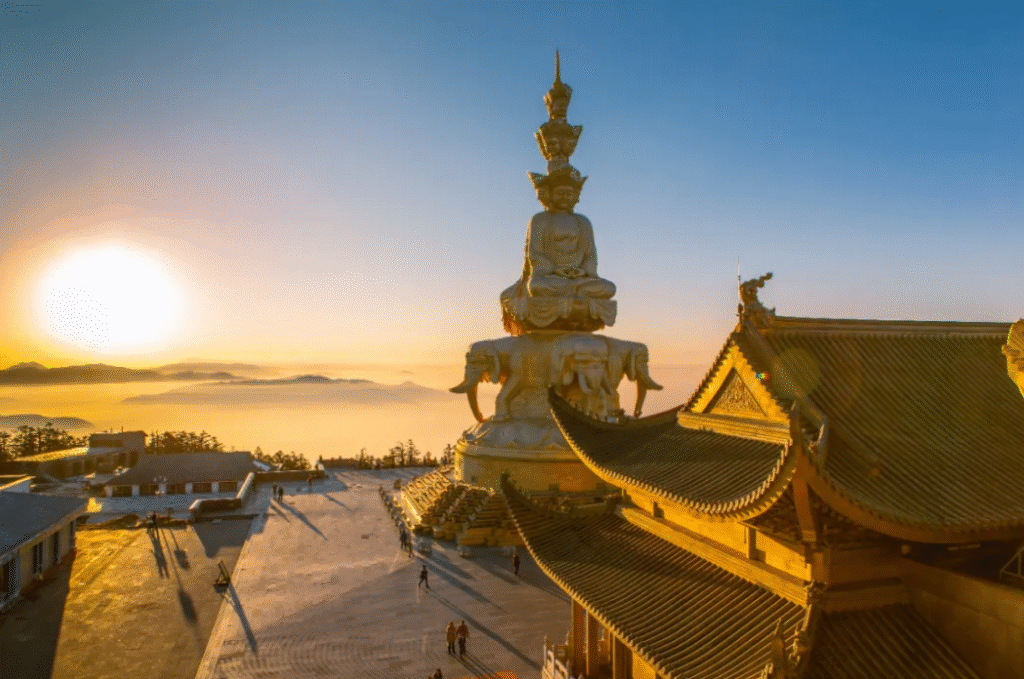
When the lingering echo of the morning bell drifts over the green mountains, and the profound resonance of the evening drum ripples through the sea of clouds, nestled within the magnificent landscape of China lie four sacred mountains steeped in a thousand years of Buddhist radiance. They stand amid the vastness of the Loess Plateau, rest in the embrace of the East China Sea’s blue waves, rise above the mist-shrouded lands of Bashu, or hide deep within the lush green hills of southern Jiangnan — Mount Wutai in Shanxi, Mount Putuo in Zhejiang, Mount Emei in Sichuan, and Mount Jiuhua in Anhui. Each of these mountains is dedicated to a revered Bodhisattva: Manjushri (symbolizing wisdom), Avalokiteshvara (symbolizing compassion), Samantabhadra (symbolizing vow and practice), and Ksitigarbha (symbolizing aspiration). Every inch of their soil bears the mark of Buddhist culture, and every wisp of wind carries the power to soothe the soul, waiting to meet those in search of tranquility.
ⅠMount Wutai: The Sacred Site of Manjushri, a Buddhist Realm
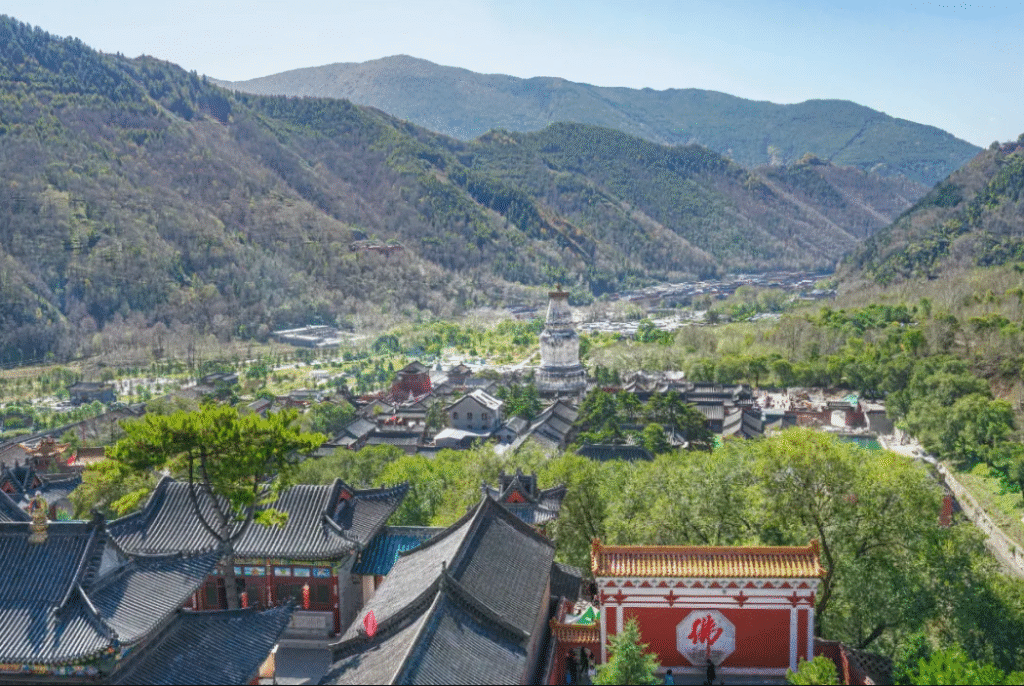
When talking about China’s Buddhist mountains, Mount Wutai in Shanxi is undoubtedly unmissable. Located in Wutai County, Shanxi Province, it covers an area of over 3,000 square kilometers. Surrounded by five peaks, each with a broad and flat summit shaped like a stone platform, it earns its name “Wutai” (Five Platforms). With an altitude of over 3,000 meters, its unique geographical environment has fostered a strong Buddhist atmosphere, making it one of the world’s and China’s multi-faceted Buddhist cultural centers.
Throughout history, Mount Wutai once flourished remarkably. At its peak, there were more than 300 monasteries, where the morning bells and evening drums echoed continuously, and the incense smoke curled ceaselessly. Even after the passage of time, Mount Wutai still preserves numerous precious Buddhist buildings today, including 39 monasteries within the five platforms and 8 outside. Wandering through the mountains, the red walls and yellow tiles of the monasteries are nestled among green mountains and trees, and the air is filled with a faint scent of sandalwood. It seems to instantly free people from the hustle and bustle of the world, allowing them to immerse themselves in this ancient solemnity. Whether you are a devout believer coming for pilgrimage or a tourist eager to experience the charm of Buddhist culture, Mount Wutai is an excellent choice.
Ⅱ Mount Putuo: The Pure Land of Avalokiteshvara, a Sea Island Fairyland
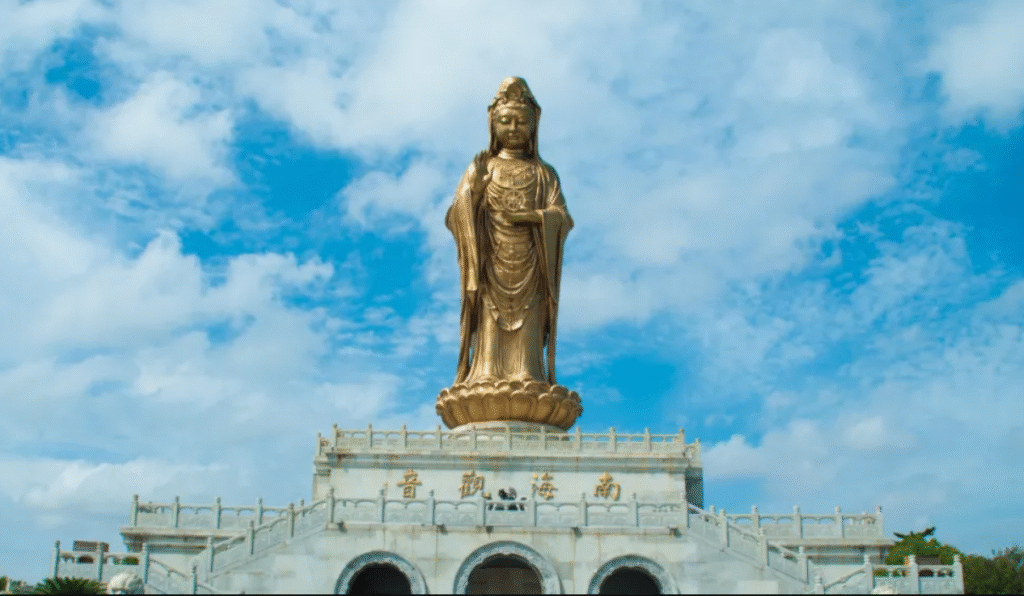
If Mount Wutai is a Buddhist realm amid mountains and forests, then Mount Putuo in Zhejiang is a pure land in the sea. Situated in the Zhoushan Archipelago, Zhejiang Province, it is a small island covering an area of approximately 12.5 square kilometers. Despite its small size, Mount Putuo enjoys a worldwide reputation, holding the title of “The Unparalleled Land Blessed by Five Dynasties, the Most Revered Mountain Under the Four Seas”. All this is because it is the sacred site of Avalokiteshvara Bodhisattva.
Mount Putuo is not only a Buddhist shrine but also a famous island scenic spot. Surrounded by the sea on all sides, the waves beat against the reefs, and the sea breeze caresses the cheeks, bringing great comfort. The island boasts beautiful scenery with dense vegetation and well-arranged pavilions and towers. Historically, Buddhism on Mount Putuo also thrived remarkably. At its prime, there were 82 monasteries and 128 thatched huts, housing over 4,000 monks and nuns. Today, every morning and evening, when the sun shines on the sea surface and reflects on the golden roofs of the monasteries, the serene and sacred atmosphere always attracts countless people to come and pray, seeking solace in their hearts.
Ⅲ Mount Emei: The Manifestation Site of Samantabhadra, the Most Beautiful Mountain Under Heaven
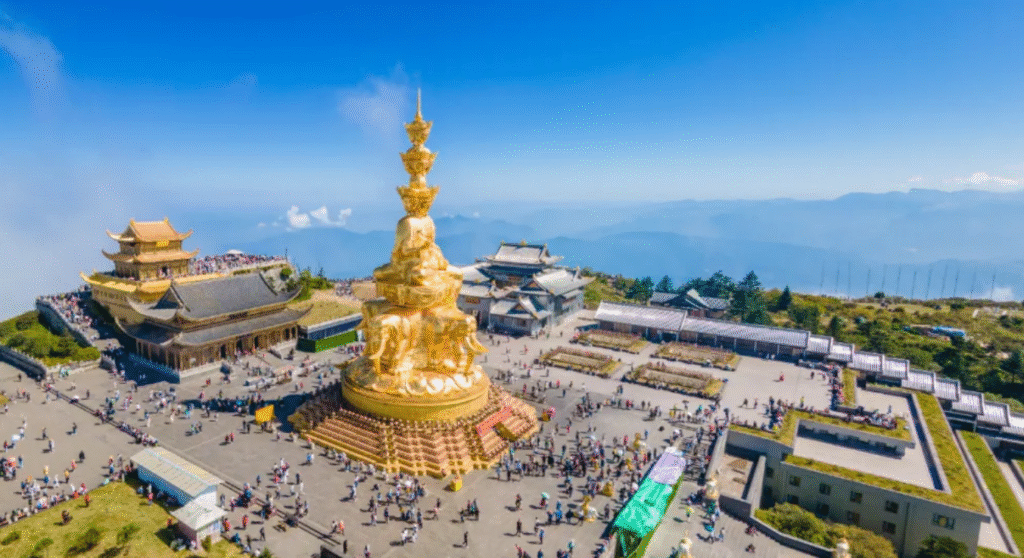
Mount Emei in Sichuan, known as “the most beautiful mountain under heaven”, is located in Emeishan City, Sichuan Province. The scenic area covers 154 square kilometers, and its highest peak, Wanfo Ding (Ten Thousand Buddhas Peak), reaches an altitude of 3,099 meters. The beauty of Mount Emei lies not only in its magnificent natural scenery but also in its profound Buddhist cultural heritage, as it is the sacred site of Samantabhadra Bodhisattva.
Mount Emei has many titles such as “Fairy Mountain and Buddhist Kingdom”, “Kingdom of Plants”, “Paradise of Animals”, and “Geological Museum”, each corresponding to its unique charm. Walking along the mountain trails, you can see exotic rocks, strange mountains, waterfalls, and springs everywhere. Rare plants and animals thrive on this land, like a vivid natural painting. The Buddhist monasteries scattered throughout the mountains add a strong cultural touch to this painting. From the ancient Wannian Temple to the solemn Golden Summit, every monastery has witnessed the inheritance and development of Buddhist culture on Mount Emei. Standing on the Golden Summit, overlooking the rolling sea of clouds and the distant continuous mountains, the grandeur and shock are enough to bring an unprecedented spiritual baptism to people.
Ⅳ Mount Jiuhua: The Sacred Site of Ksitigarbha, a Place of Flourishing Incense
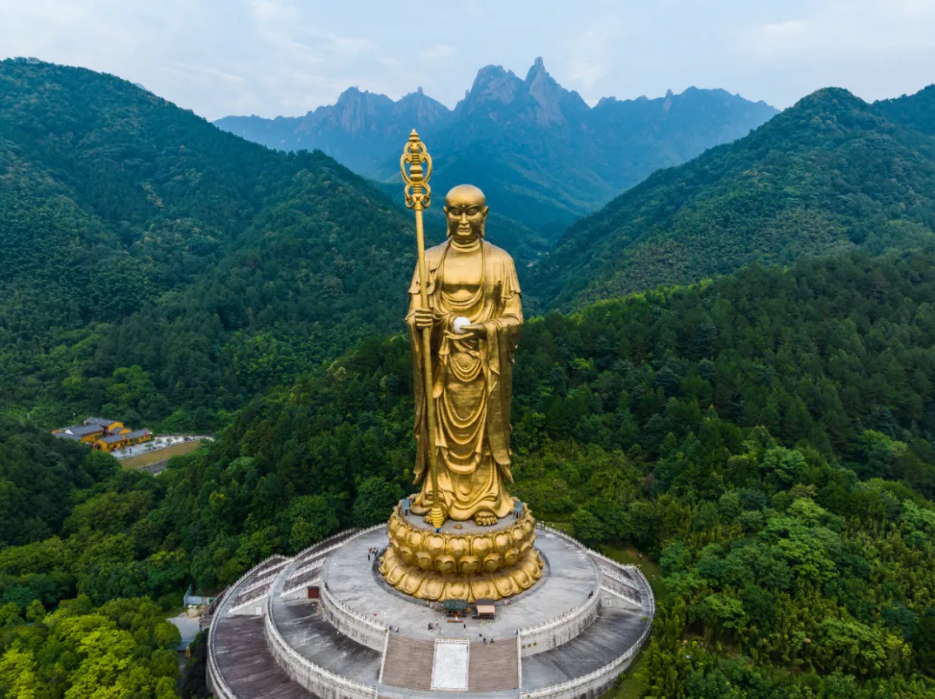
Finally, we come to Mount Jiuhua in Anhui Province. It is located in Chizhou City, Anhui Province, 20 kilometers away from Qingyang County of Chizhou City and about 60 kilometers away from Guichi District on the southern bank of the Yangtze River. Covering an area of 120 square kilometers, its main peak, Shiwang Peak, stands at an altitude of 1,344.4 meters and is a branch of Huangshan Mountain. Mount Jiuhua is famous for its numerous peaks and thriving incense. There are 99 peaks in total, among which 9 peaks such as Tiantai, Shiwang, Lianhua, and Tianzhu are the most magnificent.
As the sacred site of Ksitigarbha Bodhisattva, Mount Jiuhua has long been a pilgrimage destination for pious believers, holding the dual honors of “the most flourishing incense under heaven” and “the first mountain in southeastern China”. Ancient monasteries stand in great numbers among the mountains, with incense smoke curling around. Each monastery carries people’s yearning for a better life and their respect for Ksitigarbha Bodhisattva. Wandering on Mount Jiuhua, you can not only enjoy the magnificent scenery of the exotic peaks but also feel the piety and profoundness of Buddhist culture. Especially during holidays, believers and tourists from all over the country gather here to experience this unique religious atmosphere and purify their souls in the incense smoke and the sound of bells.
When we rush about in the fast-paced life and get lost in the numerous trivial matters, we might as well look back at these four great Buddhist mountains — the bell of Mount Wutai can awaken the sleeping wisdom, the sea breeze of Mount Putuo can calm the inner anxiety, the sea of clouds of Mount Emei can broaden the horizon, and the incense of Mount Jiuhua can ignite the original aspiration of doing good. They are not just coordinates on the map, but lighthouses for the soul, and warm havens that have endured for a thousand years. If you are willing, pack your bags and embark on a journey. Go touch the stone steles in the mountains, listen to the Sanskrit sounds in the monasteries, and let your soul find a long-lost peace and strength in this sacred land.